
Artifact 1: Cognitive Load Theory Instructional Video
Created for EDIT 8150E: Instructional Message Design
Creating this instructional video on Cognitive Load Theory (CLT) was an exercise not just in content delivery, but in intentional instructional design. Rather than simply reciting research, I focused on crafting a learning experience that
models what it teaches: clear structure, thoughtful pacing, and careful control of cognitive demand. That meant not just scripting content, but shaping the learner’s journey slide by slide, and anticipating their mental workload with each decision.
The entire design process revolved around the same cognitive principles the video aimed to teach. I used backward design to define clear learning outcomes. I determined that viewers should leave with a solid understanding of the three types of cognitive load (intrinsic, germane, and extraneous) and be able to identify specific ways to reduce unnecessary load in their own materials. Every design choice from script structure to slide sequencing to visual layout was filtered through that lens. I was constantly balancing clarity, pacing, and tone to support comprehension without overloading the viewer.
The project also required me to consider audience needs deeply, particularly in terms of prior knowledge, attention span, and the digital format. With that in mind, I incorporated analogies (like memory as digital storage space), real-world applications (like a new employee onboarding situation), and visual cues to support comprehension and retention. I carefully selected where to reinforce key messages visually and where to let the narration carry the weight. These decisions emerged from a working understanding of design principles that reduce extraneous cognitive load and promote schema-building, echoing Mayer’s multimedia learning principles.
This project exemplifies my development skills as an instructional designer not just in writing and scripting content, but in organizing and transforming theoretical material into an engaging multimedia learning asset.
Designing for CLT gave me the opportunity to practice what I preach: using structure and sequence to manage complexity, layering new ideas on top of familiar ones, and continuously refining my delivery methods based on what I know about the learner’s perspective. I see this as a strong reflection of my ability to design instructional interventions that are grounded in theory but deeply practical in form.
Designing a video about Cognitive Load Theory came with a unique kind of pressure—it felt important that the final product not just explain the theory, but actually follow it. It pushed me to be more intentional than usual, not just as a content creator, but as a designer thinking about how each element contributes to (or competes with) the learner’s mental capacity. I believe that empathy was at the center of this project’s success; without putting myself in the shoes of someone watching this video and digesting the information for the first time, I would likely have produced something of interest only to people like myself who are self-proclaimed CLT nerds. I am very proud of the final product. I really enjoy the process of video editing and production, so this was a fun diversion from writing based projects. That experience deepened both my understanding of CLT and my confidence in designing with cognitive clarity at the forefront.
⬨⬨⬨
Artifact 2: “Regulating as Resistance” Interactive eCourse
Created for EDIT6220E: Designing Interactive Learning Environments
This project began with a clear instructional goal: to create a digital learning experience that introduces accessible self-regulation tools rooted in Dialectical Behavior Therapy (DBT) and Polyvagal Theory. I designed Regulate to Resist in Articulate Storyline as a short, self-paced module intended for people navigating chronic overwhelm, particularly in the face of political uncertainty, social injustice, and environmental collapse. This is a topic that is constantly on my mind as I am finding myself overwhelmed and disheartened by the current state of the world, so I channeled the anxiety into a course that I am quite proud of.
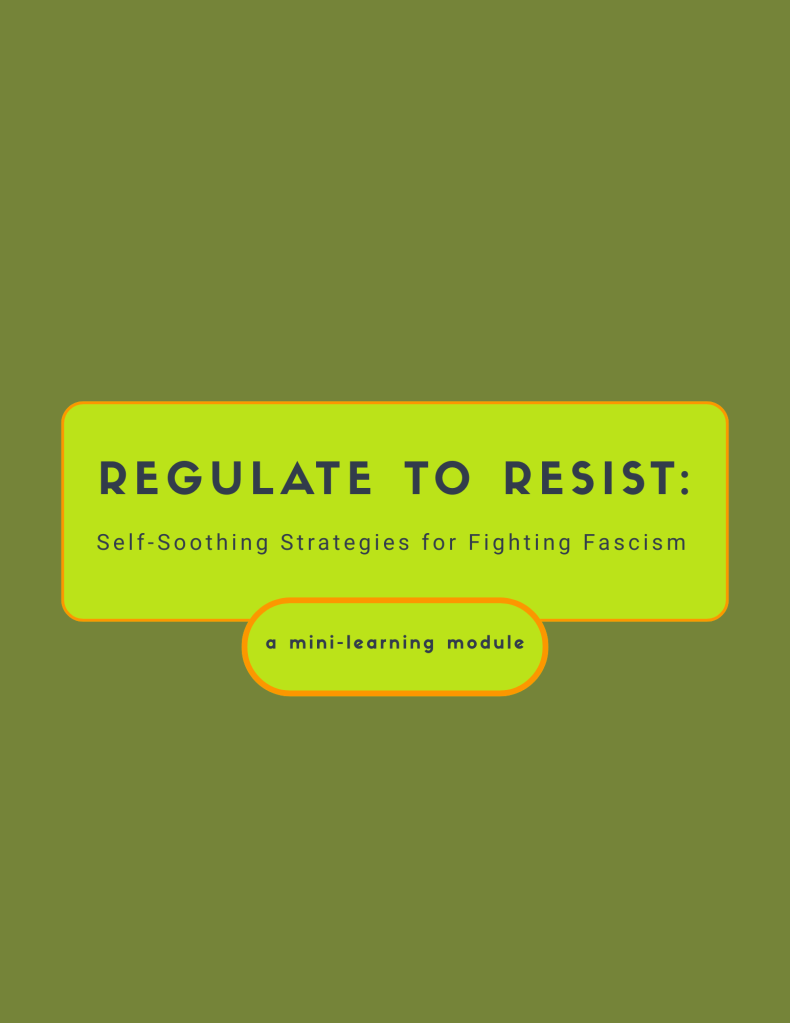
The development process emphasized both clarity and empathy. I started by mapping a three-part structure—first orienting the learner to the emotional and political context, then introducing a small number of concrete skills, and finally providing space for practice and reflection. Each scene was designed to minimize extraneous load while maximizing emotional and cognitive accessibility. Interactive slides were layered with voiceover narration, calming visual pacing, and plain language explanations that invited curiosity rather than performance. I didn’t just want to teach emotional regulation—I wanted learners to feel regulated as they moved through the module.
Throughout this project, I relied heavily on iterative design and learner-centered decision-making. I adapted instructional strategies from cognitive load theory, multimedia learning, and trauma-informed pedagogy to structure each interaction. For example, I used hover-over definitions and audio prompts to reduce on-screen text and support different cognitive processing preferences. Activities like the “Cope Ahead Practice” and “Accumulating Positives Practice” were turned into scenario-based reflection tools, designed to help learners apply what they were seeing in ways that felt grounded in their own lives.
Working on this course deepened my ability to translate high-level theoretical concepts into meaningful digital instruction. The entire project required fluency in both message design
and module development, from scripting and sequencing content to choosing feedback cues and interaction types. I paid special attention to alignment: making sure every piece of media, every interactive decision point, and every phrase in the narration directly supported the learning objectives. That level of intentionality is something I’ve grown more confident in with each course I design.
This project also sharpened some of my technical skills. I used a generative AI tool called Elevenlabs for the narration and really enjoyed learning how to use and integrate the tool. Because the topic deals with stress, burnout, and fear, it was essential that the tone of the module feel validating and steady, so the visual design choices were as important as the smooth delivery of the content itself. I used Canva to incorporate soft color palettes and consistent layouts across the entire course and to keep the focus on the content without creating overstimulation.
Regulate to Resist is one of the most personally meaningful projects I’ve developed, but it also reflects the rigor and clarity I bring to design and development work. It’s a strong example of my ability to integrate research, technical tools, and learner-centered thinking to build digital instruction that’s as purposeful as it is practical. The entire process of building this module reinforced how much power intentional design holds, especially when the goal is to support people in moments of stress and complexity.
 NBH Designs